
 Get a Quote

 Send Inquiry
Sodium Lignosulphonate
Price 86 INR/ Kilograms
Sodium Lignosulphonate Specification
- Other Names
- Lignosulfonic Acid Sodium Salt
- Molecular Weight
- 534.51 g/mol
- Structural Formula
- Complex polymer, variable structure - sodium salt of sulfonated lignin
- Type
- Chemical Additive
- Chemical Name
- Sodium Lignosulphonate
- Molecular Formula
- C20H24Na2O10S2
- Ph Level
- 7 - 9 (10% solution)
- CAS No
- 8061-51-6
- Grade
- Industrial
- Purity
- >= 92%
- Color
- Brown
- EINECS No
- 231-985-9
- HS Code
- 380400
- Application
- Concrete admixtures, animal feed binder, ceramics, dyes, coal water slurry, dust control
- Melting Point
- Decomposes
- Physical Form
- Powder
- Poisonous
- Non-toxic
- Appearance
- Light brown to yellow powder
- Usage
- Used as a set retarder and plasticizer in construction industry
- Smell
- Slightly woody
- Water Content
- 7%
- Feature
- Good dispersion, water reducibility, binding properties
- Shelf Life
- 24 months
- Solubility
- Easily soluble in water
- pH Value (10% Solution)
- 7 - 9
- Toxicity
- Non-toxic, environmentally friendly
- Bulk Density
- 0.5 - 0.8 g/cm3
- Reducing Sugar
- 7%
- Ash Content
- 20%
- Storage Conditions
- Store in a dry, ventilated warehouse away from moisture
- Packaging
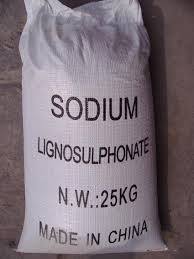
- 25 kg/bag or as required
- Insoluble Matter
- 1.5%
Sodium Lignosulphonate Trade Information
- Minimum Order Quantity
- 1000 Bags
- FOB Port
- Mumbai
- Payment Terms
- Cash in Advance (CID), Cheque, Cash Advance (CA)
- Supply Ability
- 5 Bags Per Week
- Delivery Time
- 7 Days
- Sample Available
- Yes
- Sample Policy
- Free samples are available
- Packaging Details
- 25Kg. Bag
- Main Domestic Market
- All India
About Sodium Lignosulphonate
Sodium Lignosulphonate
We offer our clients a large array of Sodium Lignosulphonate which is used in food industry. Appreciated for antimicrobial and preservative properties, these are also used as an ingredient in animal feeds. Made in line with the international quality standards, these Sodium Lignosulphonate are offered to our clients at moderate costs and in customized packaging.
Uses :
- Construction
- Ceramics
- Mineral powder
- Chemical industry
- Textile industry (leather)
- Metallurgical industry
- Petroleum industry
- Fire-retardant materials
- Rubber vulcanization
- Organic polymerization.[1]
Various grades of SLS as offered for different applications as under:
- Concrete admixture: acts as a plasticizer
- Leather Chemicals: acts as a dispersing agent
- Ceramic Tiles
- A Dispersing agent in Agrochemical formulations
- Textile Dispersing agent for polyester printing
Versatile Industrial Application
Sodium Lignosulphonate serves as a reliable additive across numerous industries, offering benefits such as superior dispersion, water reduction, and binding properties. Its usage spans from construction as a set retarder and plasticizer, to animal feed as a binder, and extends to ceramics, dye production, dust control, and coal water slurry formulation. Its non-toxic and eco-conscious nature makes it a preferred choice for responsible manufacturing.
Optimal Storage and Shelf Life
To preserve its quality and performance, Sodium Lignosulphonate should be stored in a dry, well-ventilated warehouse away from moisture. With correct storage, it retains its efficacy for up to 24 months. Available in convenient 25 kg packaging, it caters to various scale needs while ensuring safe and manageable handling.
Key Technical Features
This product stands out due to its high water solubility, low insoluble matter (1.5%), pH stability, and good bulk density. Its slightly woody smell and powder form make it user-friendly for handling and application. With a water content of 7% and ash content of 20%, Sodium Lignosulphonate delivers efficiency in dispersing and bonding, contributing to quality improvements in end products.
FAQ's of Sodium Lignosulphonate:
Q: How is Sodium Lignosulphonate typically used in the construction industry?
A: Sodium Lignosulphonate is commonly employed as a set retarder and plasticizer in concrete admixtures. It enhances workability, improves water reduction, and delays setting times, allowing for better handling and strengthened structure in construction projects.Q: What are the storage conditions required to maintain the quality of Sodium Lignosulphonate?
A: For optimal preservation, Sodium Lignosulphonate should be stored in a dry, well-ventilated warehouse, away from sources of moisture and humidity. This helps maintain its performance characteristics over its 24-month shelf life.Q: When is Sodium Lignosulphonate beneficial for use as an industrial additive?
A: Sodium Lignosulphonate proves advantageous whenever enhanced dispersion, water reduction, or binding qualities are needed-for instance, in manufacturing concrete, animal feed, ceramics, dyes, or for dust control applications.Q: Where can Sodium Lignosulphonate be sourced in India?
A: Sodium Lignosulphonate is readily available through industrial distributors, suppliers, and traders across India, typically supplied in 25 kg bags or custom packaging as required by clients.Q: What is the environmental and toxicity profile of Sodium Lignosulphonate?
A: This product is non-toxic, poses no threat to health during normal handling, and is considered environmentally friendly due to its degradability and safe profile.Q: How does the solubility of Sodium Lignosulphonate impact its application process?
A: Being easily soluble in water, Sodium Lignosulphonate can be quickly dissolved and thoroughly mixed into liquid formulations, making it efficient and straightforward to incorporate into various industrial processes.Q: What key benefits does Sodium Lignosulphonate provide in animal feed and ceramics?
A: In animal feed, it acts as a binder, improving pellet integrity and digestion. In ceramics, it enhances the uniformity of the mixture, aids dispersion, and contributes to smoother processing and better-finished products.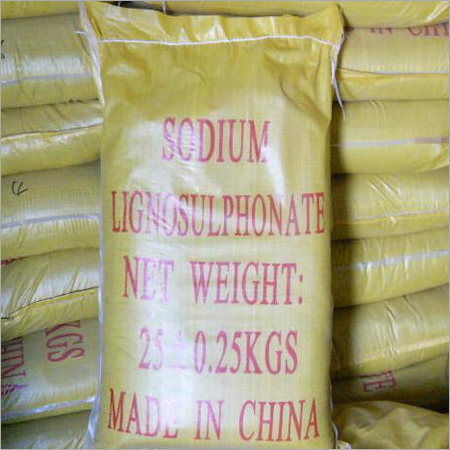

Price:
- 50
- 100
- 200
- 250
- 500
- 1000+

More Products in Construction Chemicals Category
Sodium Gluconate
Price 86 INR / Kilograms
Minimum Order Quantity : 1000 Bags
Smell : Other, Odourless
Usage : Used as a set retarder and plasticizer in construction industry
Color : White
Purity : 98% min
Methyl Hydroxyethyl Cellulose (MHEC)
Price 86 INR / Kilograms
Minimum Order Quantity : 1000 Bags
Smell : Other, Odorless
Usage : Used as a set retarder and plasticizer in construction industry
Color : White
Purity : 99%
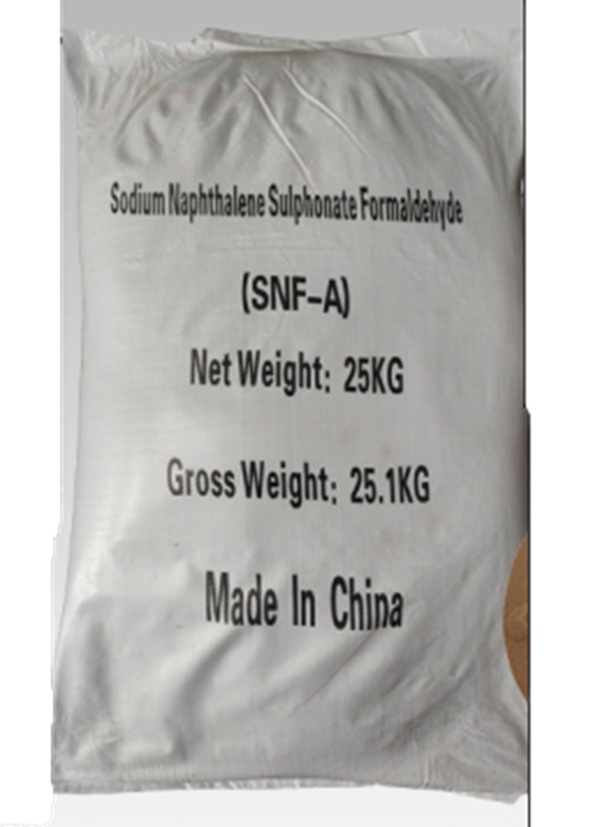
Sodium Naphthalene Formaldehyde Condensate A
Price 86 INR / Kilograms
Minimum Order Quantity : 1000 Bags
Smell : Other
Usage : Used as a set retarder and plasticizer in construction industry
Color : Brown
Purity : >92%
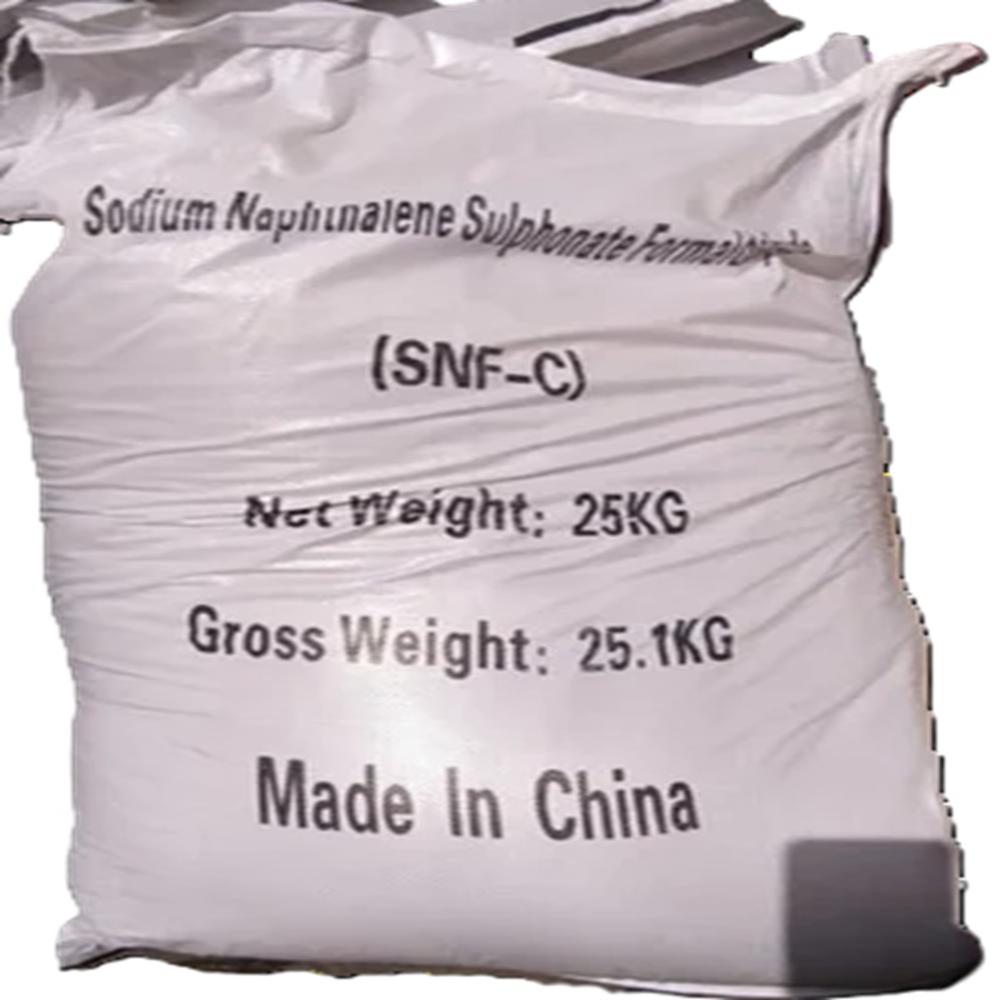
SNF - C Sodium Naphthalene Formaldehyde Condensate - C
Price 86 INR / Kilograms
Minimum Order Quantity : 1000 Bags
Smell : Other
Usage : Used as a set retarder and plasticizer in construction industry
Color : Brown
Purity : 92%


- Office No.5, 1st Floor, Shreenath Shopping Centre, D.J.Road, Vile Parle West,Mumbai - 400056, Maharashtra, India
- Phone : 08045800160
GST : 27AAAFP2040B1ZZ

- Mr Devang Dinesh Parikh (Partner)
- Mobile : 08045800160
- Send Inquiry
 Send Inquiry
 Send Inquiry
 Send SMS
 Call Me Free
Developed and Managed by Infocom Network Private Limited.
 English
 Spanish
 French
 German
 Italian
 Chinese (Simplified)
 Japanese
 Korean
 Arabic
 Portuguese