
 Get a Quote

 Send Inquiry
Methanol Chemical
Price 78 INR/ Kilograms
MOQ : 25000 Kilograms
Methanol Chemical Specification
- Properties
- Clear, pungent odor, corrosive
- Taste
- Slightly sweet
- Ph Level
- Neutral (7 at 20C)
- Solubility
- Fully miscible with water
- Storage
- Store in a cool, well-ventilated area away from ignition sources
- EINECS No
- 200-659-6
- Melting Point
- -97.6C
- Appearance
- Clear, colorless liquid
- Purity
- 99%
- Grade
- Technical Grade
- Product Type
- Organic Chemical
- Structural Formula
- CH3OH
- HS Code
- 29051100
- Ingredients
- Methanol (CH3OH)
- CAS No
- 64-19-7
- Poisonous
- YES
- Usage
- Industrial and laboratory chemical, fuel blending
- Refractive Rate
- 1.3284 at 20C
- Shape
- Amorphous liquid
- Smell
- Mild alcohol-like odor
- Physical Form
- Liquid
- Application
- Used as a solvent, antifreeze, fuel, and in chemical synthesis
- Shelf Life
- 2 Years
- Molecular Formula
- CH3OH
- Density
- 0.792 Gram per cubic centimeter(g/cm3)
- Molecular Weight
- 32.04 g/mol Grams (g)
- Viscosity
- 0.544 cP at 20C
- Autoignition Temperature
- 464C
- Explosive Limit
- 6.0-36.5% (in air)
- UN Number
- 1230
- Flash Point
- 11C (Closed cup)
- Critical Temperature
- 239.4C
- Boiling Point
- 64.7C
- Water Reactivity
- Stable, not reactive with water
- Packaging
- Available in drums, IBC tanks, bulk tankers
- Vapor Pressure
- 127 mmHg at 25C
- Hazard Class
- 3 (Flammable liquid)
Methanol Chemical Trade Information
- Minimum Order Quantity
- 25000 Kilograms
- FOB Port
- Mumbai
- Supply Ability
- 500 Kilograms Per Month
- Delivery Time
- 7 Days
- Sample Available
- Yes
- Sample Policy
- Contact us for information regarding our sample policy
- Packaging Details
- 158Kg. Drum & Tanker Load
- Main Domestic Market
- All India
About Methanol Chemical
Methanol
- Methanol, also known as methyl alcohol among others, is a chemical with the formula CH3OH.
- Today, methanol is mainly produced industrially by hydrogenation of carbon monoxide.
- Methanol is the simplest alcohol, consisting of a methyl group linked to a hydroxyl group. It is a light, volatile, colourless, flammable liquid with a distinctive odor similar to that of ethanol (drinking alcohol).
- Its principal uses are in organic synthesis, as a fuel, solvent, and antifreeze.
Methanol has many industrial and scientific uses:-
One of the most common uses of methanol is as an ingredient for formaldehyde. This chemical which can be derived from methanol is used extensively in the production of plastics, including those used in construction materials, car parts, paints, explosives, and wrinkle-resistant artificial fabrics.
Versatile Applications of Methanol
Methanol is a key ingredient in various industries, serving as a solvent, antifreeze, fuel, and intermediate in chemical manufacturing. Its high purity and miscibility with water make it suitable for laboratory research, fuel blending, and as a vital component in producing formaldehyde and other chemicals. The technical grade methanol is specifically tailored for industrial and analytical applications.
Safe Storage and Handling Guidelines
Methanol must be stored in a cool, well-ventilated area away from sources of ignition due to its high flammability (flash point: 11C). Drums, IBC tanks, and bulk tankers should remain tightly closed to avoid evaporation or exposure. With a shelf life of up to 2 years if properly stored, methanol is stable under typical warehouse conditions and non-reactive with water.
FAQs of Methanol Chemical:
Q: How should methanol be stored to maintain its quality and ensure safety?
A: Methanol should be stored in a cool, well-ventilated place, away from heat, sparks, open flames, or other ignition sources. Ensure containers are tightly sealed, and use only approved materials for storage like drums or IBC tanks. Proper storage extends shelf life up to two years and reduces the risk of accidents.Q: What are the main industrial and laboratory uses of methanol?
A: Methanol is widely employed as a solvent for paints, varnishes, and inks, as antifreeze in automotive and industrial applications, a fuel or fuel additive, and a key component in the synthesis of chemicals such as formaldehyde, acetic acid, and methyl tert-butyl ether (MTBE). It is also used in laboratory settings for research and analysis.Q: When does methanol pose the greatest risk due to its flammability?
A: Methanol is most hazardous around sources of ignition since it has a low flash point (11C, closed cup) and an explosive concentration range in air (6.036.5%). Adequate ventilation and strict control of ignition sources are crucial during storage and handling.Q: Where can methanol be purchased in India and in what packaging options?
A: Methanol is available throughout India from established distributors, suppliers, and traders. It can be purchased in a variety of packaging forms including steel drums, intermediate bulk containers (IBC tanks), and bulk tankers to suit different industrial requirements.Q: What is the process of methanol production and what grade is offered?
A: Methanol is typically produced by catalytic hydrogenation of carbon monoxide derived from natural gas or coal. The offered product is technical grade with a high purity of 99%, making it suitable for industrial, laboratory, and fuel applications.Q: How is methanol used as a fuel and what are its benefits?
A: Methanol can be used directly as a fuel or blended with gasoline. Its high volatility and clean combustion are beneficial for reducing exhaust emissions. Methanols miscibility with water and other fuels also makes it a flexible choice for fuel blending in industrial and automotive sectors.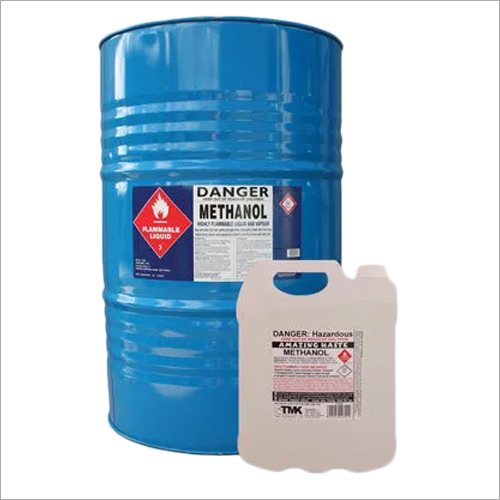
Tell us about your requirement

Price:
Quantity
Select Unit
- 50
- 100
- 200
- 250
- 500
- 1000+
Additional detail
Mobile number
Email


Contact Us

- Office No.5, 1st Floor, Shreenath Shopping Centre, D.J.Road, Vile Parle West,Mumbai - 400056, Maharashtra, India
- Phone : 08045800160
PARAMOUNT CHEMICAL & ACID CORPORATION
GST : 27AAAFP2040B1ZZ

- Mr Devang Dinesh Parikh (Partner)
- Mobile : 08045800160
- Send Inquiry
 Send Inquiry
 Send Inquiry
 Send SMS
 Call Me Free
PARAMOUNT CHEMICAL & ACID CORPORATION
All Rights Reserved.(Terms of Use)
Developed and Managed by Infocom Network Private Limited.
Developed and Managed by Infocom Network Private Limited.
 English
 Spanish
 French
 German
 Italian
 Chinese (Simplified)
 Japanese
 Korean
 Arabic
 Portuguese