
 Get a Quote

 Send Inquiry
Liquid Sodium Hypochlorite
Price 78 INR/ Kilograms
MOQ : 25000 Kilograms
Liquid Sodium Hypochlorite Specification
- CAS No
- 64-19-7
- Purity
- 10-15% available chlorine
- Shape
- Liquid
- Shelf Life
- 6-12 months (degrades over time)
- EINECS No
- 231-668-3
- Physical Form
- Liquid
- Appearance
- Clear light yellow to greenish liquid
- Ingredients
- Sodium hypochlorite, water
- Molecular Formula
- NaOCl
- Grade
- Industrial
- Solubility
- Miscible with water
- Application
- Disinfectant, bleaching agent, water treatment, sanitizing
- Poisonous
- YES
- Smell
- Characteristic chlorine-like odor
- Usage
- Water purification, sanitation, bleaching textiles, household cleaning
- Refractive Rate
- 1.36
- Structural Formula
- NaOCl
- Molecular Weight
- 74.44 g/mol
- Properties
- Clear, pungent odor, corrosive
- Ph Level
- 11-13
- Product Type
- Chemical
- Taste
- Not applicable / Bitter
- Melting Point
- -6 °C
- Density
- 1.08 Gram per cubic centimeter(g/cm3)
- Storage
- Store in cool, dark, and well-ventilated area. Avoid direct sunlight and heat.
- HS Code
- 282890
- Hazards
- Corrosive to skin and eyes, harmful if swallowed or inhaled.
- Boiling Point
- Decomposes before boiling
- Compatibility
- Incompatible with acids, reducing agents, ammonia
- Toxicity
- Causes irritation; toxic on ingestion or inhalation
- Packing Type
- HDPE Carboys, Jerry Cans, Drums
- Freezing Point
- -17 C
- UN Number
- 1791
- pKa
- 7.52
- Viscosity
- Similar to water
- Stability
- Unstable at high temperatures and under direct light
- Flash Point
- Non-flammable
Liquid Sodium Hypochlorite Trade Information
- Minimum Order Quantity
- 25000 Kilograms
- FOB Port
- Mumbai
- Supply Ability
- 500 Kilograms Per Month
- Delivery Time
- 7 Days
About Liquid Sodium Hypochlorite
Liquid Sodium Hypochlorite
We are engaged in offering Liquid Sodium Hypochlorite that is widely used as a disinfectant and a bleaching agent. This chemical is formed by the reaction of chlorine and caustic soda. Before dispatch, the range of Liquid Sodium Hypochlorite is tested on well defined quality parameters to ensure purity, longer shelf life and high effectiveness.
Powerful Cleaning and Disinfecting
Sodium hypochlorite is renowned for its potent disinfecting and sanitizing abilities, making it invaluable in water purification, household cleaning, and industrial sanitation. Especially effective at eliminating bacteria and viruses, it helps maintain safe, hygienic environments. Always use appropriate concentrations to maximize cleaning power while reducing risks associated with exposure.
Safe Storage and Handling Practices
Due to its corrosive and unstable nature at elevated temperatures and in sunlight, Sodium Hypochlorite should be stored in tightly sealed HDPE carboys, jerry cans, or drums in cool, dark, and ventilated locations. Ensure the chemical remains inaccessible to unauthorized personnel, and avoid any contact with incompatible substances such as acids, ammonia, or reducing agents to prevent hazardous reactions.
Applications Across Industries
With its high chlorine content, Sodium Hypochlorite serves many sectors, including water treatment plants, hospitals, textile industries, and commercial laundries. It is vital as a bleaching agent, disinfectant, and purifier, providing reliable performance for sanitation and cleaning. Proper application ensures effective microbial control and surface bleaching.
FAQs of Liquid Sodium Hypochlorite:
Q: How should Sodium Hypochlorite be safely handled and stored?
A: Always handle Sodium Hypochlorite using appropriate personal protective equipment, such as gloves and goggles, to prevent skin and eye contact due to its corrosive nature. Store it in HDPE carboys, jerry cans, or drums in a cool, dark, and well-ventilated area, away from direct sunlight and any heat sources. Ensure it is kept isolated from acids, ammonia, and reducing agents to avoid hazardous reactions.Q: What are the main benefits of using Sodium Hypochlorite as a disinfectant?
A: Sodium Hypochlorite effectively kills a wide spectrum of bacteria, viruses, and fungi, making it an excellent disinfectant for water purification, surface sanitation, and household cleaning. Its strong oxidizing property enables efficient removal of contaminants, thus safeguarding public health in various environments.Q: When is Sodium Hypochlorite most commonly used?
A: This compound is typically employed during routine water treatment, bleaching processes in textile manufacturing, household cleaning, and sanitizing surfaces in healthcare settings. It should be used during cleaning operations where powerful disinfection or bleaching is required, following safety guidelines outlined by the supplier.Q: Where can Sodium Hypochlorite be applied in industrial settings?
A: In industrial applications, Sodium Hypochlorite is widely applied for water disinfection in treatment plants, bleaching in textile factories, sterilization in hospitals, and cleaning in food processing units. Its versatile properties make it suitable wherever thorough purification or microbial control is essential.Q: What precautions should be taken during the use of Sodium Hypochlorite?
A: To ensure safety, avoid direct skin and eye contact, inhalation of vapors, and ingestion, as the chemical is both corrosive and toxic. Always use Sodium Hypochlorite in well-ventilated areas, never mix with incompatible substances, and follow the manufacturers recommended usage concentration.Q: How does exposure to heat and light affect Sodium Hypochlorite?
A: Exposure to high temperatures or direct sunlight causes Sodium Hypochlorite to decompose, reducing its effectiveness and releasing hazardous chlorine gas. Therefore, always store and use the chemical away from heat sources and direct light to maintain its stability and potency.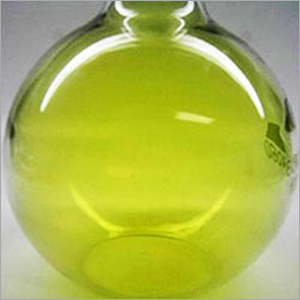
Tell us about your requirement

Price:
Quantity
Select Unit
- 50
- 100
- 200
- 250
- 500
- 1000+
Additional detail
Mobile number
Email

More Products in Chlor Alkali Products Category
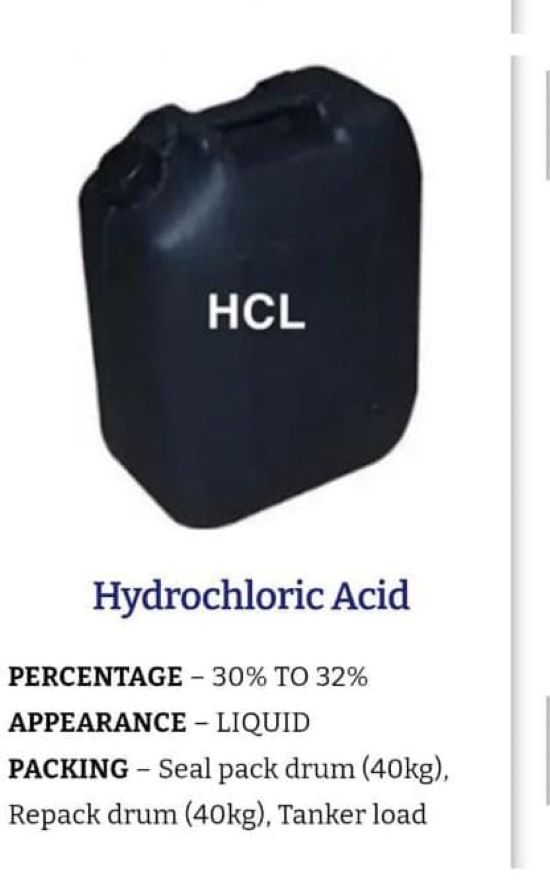
Hydrochloric Acid (Carboys)
Price 78 INR / Kilograms
Minimum Order Quantity : 25000 Kilograms
Molecular Formula : HCL
Purity : 30% 32%
CAS No : 64197
Properties : Clear, pungent odor, corrosive

Contact Us

- Office No.5, 1st Floor, Shreenath Shopping Centre, D.J.Road, Vile Parle West,Mumbai - 400056, Maharashtra, India
- Phone : 08045800160
PARAMOUNT CHEMICAL & ACID CORPORATION
GST : 27AAAFP2040B1ZZ

- Mr Devang Dinesh Parikh (Partner)
- Mobile : 08045800160
- Send Inquiry
 Send Inquiry
 Send Inquiry
 Send SMS
PARAMOUNT CHEMICAL & ACID CORPORATION
All Rights Reserved.(Terms of Use)
Developed and Managed by Infocom Network Private Limited.
Developed and Managed by Infocom Network Private Limited.
 English
 Spanish
 French
 German
 Italian
 Chinese (Simplified)
 Japanese
 Korean
 Arabic
 Portuguese